

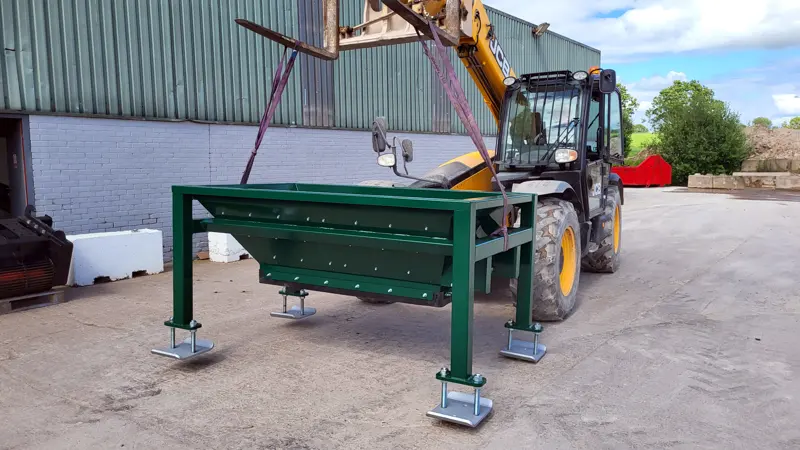
Infeed hoppers
Wet, stringy or coarse feedstock bridges and rat-holes in plain hoppers, starving the process. A live-bottom hopper holds a buffer and discharges at a controlled rate.
| Hopper volumetypical | 5–80 | m³ |
| Discharge ratetypical | 0.5–50 | m³/h |
| Drive (screws or hydraulic pack)typical | 4–11 | kW |
| Feedstock moisture handledtypical | ≤60 | % wb |
| Materials | 304 stainless option; mild steel with galvanised frame; Hardox wear strips | |
| Power | 400 V / 3-ph / 4–11 kW | |
Typical = indicative range. Every unit is sized to your material and duty, and confirmed on the quote.
Where it’s used
- Poultry litter / manure feed to pyrolysis
- wood chip to boilers
- digestate fibre
- AD dosing
For: Pyrolysis, gasification and biomass boiler sites (~300 kW+); AD operators
Why ours
- Built for high-moisture poultry litter, not just wood chip
- integrates agitator and metering screw
- sized to your storage autonomy
What you get
- DoC
- O&M manual
- GA drawing
- electrical schematics
- spares list
Options: Multi-screw live bottom; walking floor; agitator; level probes; weather hood
Complete the line
- Marking
- CE
- Standards
- Supply of Machinery (Safety) Regs 2008 / EU 2006/42 (→ 2023/1230 from Jan 2027); EN ISO 12100; EN 60204-1; EN ISO 13857; EN 618
What is the lead time?
Typically 10–16 weeks from an approved general arrangement drawing.
Can you fit it to our existing plant?
Yes. We survey the site, draw the interface and build to suit your flanges, heights and controls.
Do you install and commission?
Yes. We deliver, install, wire, test and commission, or supply for your own team to fit.
Tell us your material and tonnage. We'll size it.
Send photos, drawings or just a description. You get a sized proposal and a firm price.